


Light and nutrients only pay off when the climate in your grow room is right. This collection brings together everything that moves, cleans and controls the air: extraction fans, carbon filters, ducting, circulation fans, humidifiers and dehumidifiers, heaters, CO₂ bags and climate controllers. Brands include Can-Fan, Can-Filters, Dutch Masters, Garden Highpro, Cli-Mate, Inqontrol, SMSCOM, Clivex and Quest Climate.




Build your climate step by step
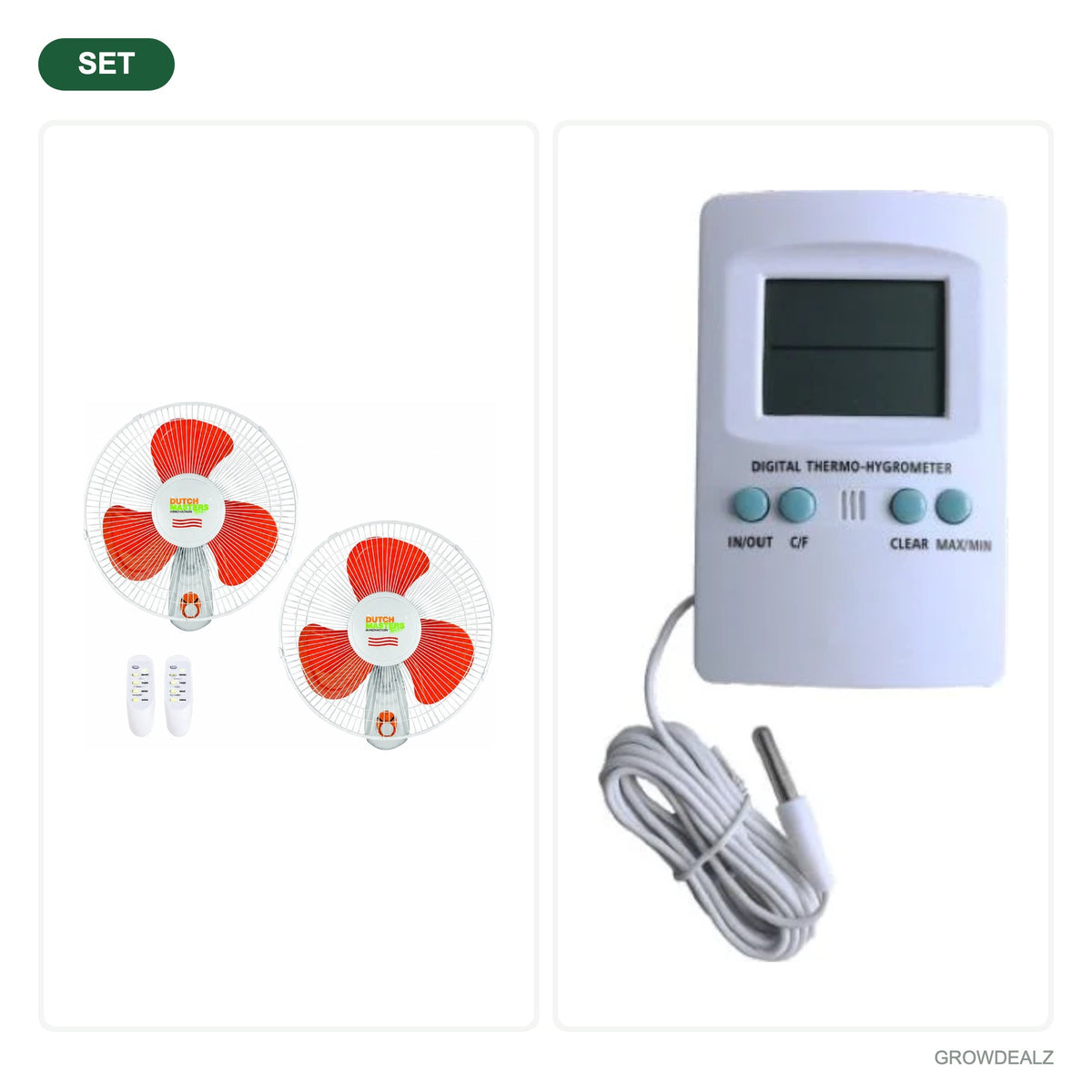
Start with extraction: the fan removes warm, humid air and pulls fresh air in, while a carbon filter keeps odours inside. Size the fan to the volume of your tent plus some headroom for the filter and ducting; our guide on choosing the right extraction fan walks you through the maths. Add one or more circulation fans so the air moves through the canopy and stems grow sturdier.
Humidity, temperature and automation
Young plants and cuttings like higher humidity, while flowering plants need drier air to reduce the risk of mould. A humidifier or dehumidifier from humidity helps you stay in range. A fan or climate controller from controllers adjusts fan speed to temperature and humidity automatically, which also keeps noise down. Start your setup in ventilation.
Questions & answers about Climate
All growing questions →- Climate What is the ideal temperature in a grow tent? About 22 to 28 °C with the lights on, and no more than about 5 °C cooler when they're off. Read the answer →
- Climate What is the ideal humidity in a grow tent at each stage? About 65 to 80% for seedlings and cuttings, 50 to 70% in growth, and 40 to 50% in flowering, a bit lower toward the end. Read the answer →
- Climate What is VPD and how do I use it in a grow tent? VPD (vapour pressure deficit) combines temperature and humidity into one number that tells you how strongly the air pulls water out of th... Read the answer →
- Climate Do I need a climate controller, or is a thermo-hygrometer enough? A thermo-hygrometer is enough to start with. A controller is worth it once you want fans, humidifier and heater to react on their own. Read the answer →

