


A measuring cup is an indispensable tool for every grower who wants to dose fertilizer, additives or nutrient solutions exactly. Especially in indoor growing, where precise amounts determine plant growth, accuracy plays a major role. With a high-quality measuring cup, liquids such as fertilizer, pH regulators, boosters or additives can be measured precisely and added evenly to the irrigation system or tank.
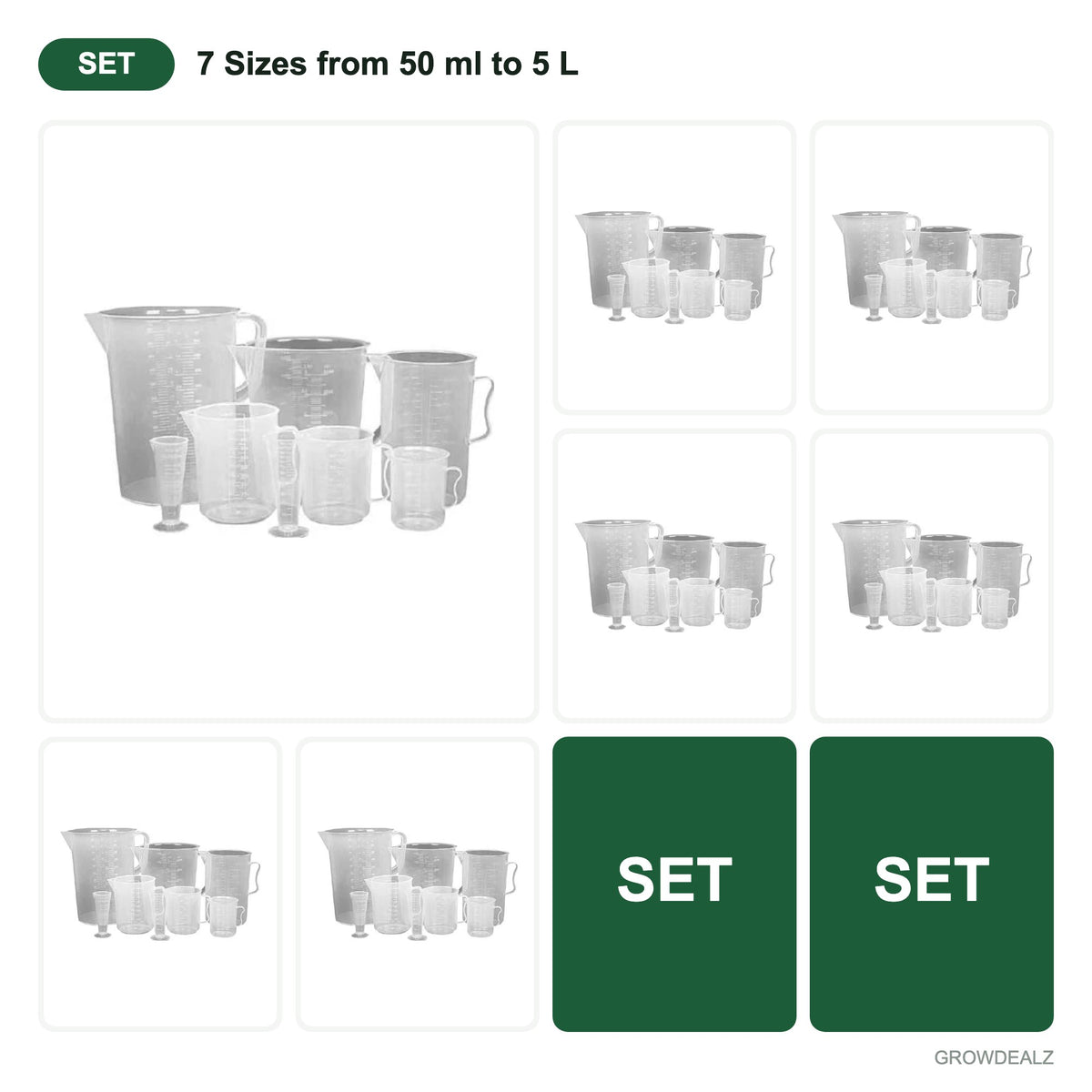
Accurate dosing starts with the right measuring cup. This collection covers cups from 50 ml and 100 ml for small additive doses up to 250 ml, 500 ml, 1 L, 2 L and 5 L for mixing larger batches. Use a small cup for boosters and concentrates, where a few millilitres make a difference, and a large one for base nutrients and filling your tank. Keep separate cups for different products, or rinse well in between, to avoid unwanted reactions. After mixing, check your solution with a meter from pH & EC meters and browse nutrients for your next feed.




Questions & answers about Measuring Cups
All growing questions →- Water, pH & EC How often should I change the water in my reservoir? In recirculating hydro, every 1 to 2 weeks. In soil or coco you mix fresh feed for each watering, so there is nothing to change. Read the answer →
- Water, pH & EC What is the ideal water temperature for my plants? Roughly 18 to 22 °C. Colder water slows the roots, warmer water above about 24 °C makes root rot much more likely. Read the answer →
- Medium & pots How often should I water in soil and in coco? Soil: water when the pot feels light and the top 2–3 cm are dry. Coco: water small amounts often, daily or every second day in bigger pla... Read the answer →
- Water, pH & EC Can I use tap water, or do I need reverse osmosis water? Tap water is fine if it's moderately hard (EC below roughly 0.8). RO water is a blank slate for exact control, but you must add Cal-Mag. Read the answer →
Why a Measuring Cup Matters
Correct dosing is crucial to avoid over-fertilizing or nutrient deficiency. A measuring cup helps you keep the mixing ratio exact and get the full potential out of fertilizers, root stimulators or pH products.
Advantages of a High-Quality Measuring Cup
Exact scale: millilitre and litre markings for precise work. Chemical-resistant: withstands aggressive fertilizers and acids. Transparent material: easy to read the fill level. Sturdy shape: prevents spills and makes pouring easier. Easy to maintain: quick to clean and reusable.
Use in Practice
Clean before use to avoid residue. Measure fertilizer and additives one at a time – never mix them directly before they're dissolved in water. Rinse after every use, especially with highly concentrated nutrient solutions. Check the pH value once the mixture is ready, to reach optimal levels.
Tip: combined with pH and EC measurement, nutrient management can be controlled even more precisely.
Different Sizes and Materials
Measuring cups come in different sizes depending on your needs – from 100 ml for small mixes up to 5 litres for larger tanks. They're usually made from sturdy plastic or polypropylene (PP), making them especially durable and chemical-resistant.
Buy Measuring Cups
A measuring cup is part of the basic equipment for every growing environment. Whether for fertilizer, boosters, pH or EC regulators – with the right measuring tool you ensure your plants always get the perfect nutrient mix. Precision is the key to healthy growth and maximum yield.

